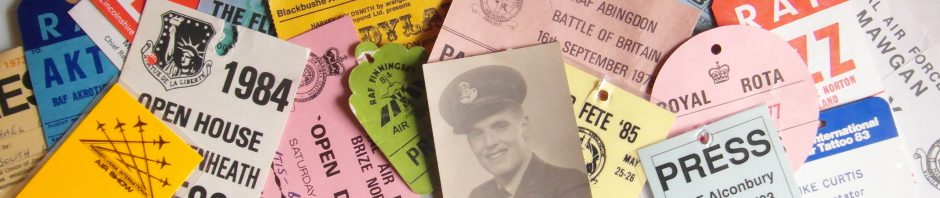
Some further tales that were edited out of my over-written first crack at Deadlines will gradually be added here. Other relevant snippets arising from day to day news will also slide in. Any further news on Wellington Z1110 and its six crew, and other stories relating to World War 2, will be posted under the relevant WW2 headings. Meanwhile……
Loretta Swit RIP
Loretta Swit was better known as Major Margaret Houlihan in the American comedy drama M*A*S*H (Mobile Army Surgical Hospital). She was nicknamed Hot Lips by the male doctors. She was one of the real stars of MASH which made her name after many appearances on stage and in other television shows. Loretta did an interview on BBC Radio Lincolnshire years ago – I think she was appearing on stage in a Nottingham theatre and was interviewed across the East Midlands BBC local radio stations by Dennis McCarthy. Her death at the age of 87 has poignantly sent me back to the MASH box set, renewing my lifelong admiration for Hawkeye, Trapper, Klinger, Radar, Father Mulcahey, Hunnicutt, Winchester, Frank….and Hot Lips.
In Chapter 20 of Deadlines, I wrote:
One of the great characters in the television series `MASH` was called Frank. Major Frank Burns, played by the actor Larry Linville, lusted after Major Margaret `Hot Lips` Houlihan (Loretta Swit) who led him on and knocked him back mercilessly. Frank Burns was second in command of the 4077th Mobile Army Surgical Hospital with American troops in Korea. He was also the butt of most of the jokes. He aspired to greater rank and crawled to those above him. Called in to the office of Lieutenant Colonel Henry Blake, the boss offers him a cigarette and asks `Smoke, Frank?` Burns replies: `If you want me to, Sir.`
For my generation, `MASH` (the book, the film and the 256 television episodes) was the entry point for finding out about the Korean War which became known as `The Forgotten War`. The storylines and rapid-fire wit were regarded as metaphors for what was going on in the Vietnam War which was still in progress when the film came out and the television shows began. The real Korean War began in June 1950 when the North Korean army poured over the 38th parallel that served as the border with the pro-Western South Korea.
Frank Smith did not think much of `MASH` and he did not talk much about his experiences in Korea. In his time on the peninsula, he sustained terrible injuries and was lucky to stay alive. His problems did not come from combat but from an unusual form of `friendly fire` courtesy of his American counterparts. The story did not emerge until his grandson Paul unearthed some recordings Frank had made for the Imperial War Museum.
**********
Robbie Robertson RIP
When did I first hear of – and indeed hear – Robbie Robertson, the Canadian songwriter and lead guitarist of The Band? I can never forget – it was on what was universally agreed was to be the first ever proper bootleg record of an established star. It was called Great White Wonder and appeared in July 1969.
There were 24 tracks on this illegal double album. All of them featured Bob Dylan. Seven of them were recorded with The Band and were part of a collection that later became famous as The Basement Tapes. That`s because they were recorded in a basement in a house in West Saugerties in New York State in the summer of 1967 when Dylan was recovering from his motor cycle accident. The house was called Big Pink.
A fellow pupil at my school in Surrey brought a copy of Great White Wonder in to school at the start of the autumn term in 1969. We all clustered round the common room turntable as he carefully lowered the needle on the rotating record.
The tracks with The Band were magnificent – why weren`t they being released officially? Some eventually were in 1975 – and the most of them were later included in a box set in November 2014.
Those bootleg tracks with The Band included The Mighty Quinn (a hit for Manfred Mann), This Wheels on Fire (a hit for Julie Driscoll and Brian Auger), I Shall Be Released, Tears of Rage, Nothing was Delivered and Too Much of Nothing.
Reading the music press, I learnt who was in The Band. Robbie Robertson went onto write songs such as The Night They Drove Old Dixie Down, The Weight, Chest Fever, Across The Great Divide and Stage Fright. After The Band broke up with a star-studded concert in San Francisco in 1976, Robertson released some terrific solo albums and had a a great deal of success composing film soundtracks for people like Martin Scorsese.
In a Bridlington antique shop late in 1971, I saw the five members of The Band staring out at me from the cover of their second album released two years earlier. I now had some money from summer working on the deckchairs, crazy golf and motor boats in Filey so I could afford my own copy of that iconic album. Behind it was a second-hand copy of The Doors fifth album Morrison Hotel – that was a good lunch break from Bridlington Grammar School.
The film of that last concert by The Band was released in 1978. On a BBC course in London, I went to see it in a north London cinema. Robbie Robertson was the director of ceremonies, introducing people like Joni Mitchell, Neil Young, Dr John, Eric Clapton, Van Morrison, Muddy Waters and Bob Dylan. I still drop into my own dvd copy of the concert – and often return to The Band and Robertson`s six excellent solo albums.
Robbie Robertson died in Los Angeles on 9th August 2023 with complications associated with prostate cancer. The last surviving member of The Band, Garth Hudson, passed away on 21st January 2025, aged 87.
**********
Gordon Lightfoot RIP
The Canadian singer-songwriter Gordon Lightfoot had his biggest hit in 1974. I fondly recall repeatedly hearing `Sundown` on the juke box in the long gone pub The Falcon round the corner from the newsroom of the Lincolnshire Standard in Boston (Chapter 2: Gods of Olympus). There were many liquid lunches in that popular hostelry and someone would always put on `Sundown` across the spring months of 1974.
Lightfoot wrote many songs that other made famous. Elvis Presley and Bob Dylan recorded `Early Morning Rain`. Dylan is quoted as saying `I can’t think of any Gordon Lightfoot song I don’t like. Every time I hear a song of his, it’s like I wish it would last forever`. Lightfoot also had huge success with `If you could read my mind`, also covered by Johnny Cash. `Carefree Highway` and `Rainy Day People` were other hits.
My favourite is his majestic tribute to the 29 crew of the SS Edmund Fitzgerald which sank in a huge storm over Lake Superior in November 1975. Like Wellington Z1110, none of the crew on board were ever recovered. `The Wreck of the Edmund Fitzgerald` was released a year after the loss and Lightfoot was feted by relatives and friends of those who drowned.
`The legend lives on from the Chippewa on down,
Of the big lake they call Gitche Gumee,
Superior, they said, never gives up her dead,
When the gales of November come early`
Gordon Lightfoot won many awards in Canada and is regarded as one of the country`s greatest musical ambassadors, up there with Neil Young, Leonard Cohen, Joni Mitchell and Bruce Cockburn (Chapter 28: Debrief). He died on 1st May 2023.
**********
Derek Morter RIP
The former leader of the Blue Herons aerobatic display team has died at his home in France aged 92 (December 2022).. Derek Morter, who was an RAF pilot for more than 20 years, was working as a civilian pilot for the Fleet Air Arm at Yeovilton in Somerset when he got the idea for forming the team. He got permission to fly four Hawker Hunter aircraft as a display team from the mid-1970s until they were disbanded in 1980 due to costs.
In Chapter 26 of Deadlines, I described working with the commentary team at the International Air Tattoo at Greenham Common. `Another popular aerobatic team was The Blue Herons, four Hunters from the Fleet Requirements and Air Direction Unit at Yeovilton whose pilots were nearer to the end of their flying careers than the start. They were nick-named `The Phyllosan Four` after the tonic available at the time that claimed to fortify the over forties`.
**********
Golden Jubilee (Meeting the Queen in 2002)
The Master of the Household was commanded by Her Majesty the Queen to invite Mr Mike Curtis to Windsor Castle in April 2002. One of the events to mark the Queen`s Golden Jubilee was a reception for Her Majesty`s Media. Shoes polished and remaining hair trimmed, I duly presented myself at the Castle gates, joining a long line of newspaper, television, radio and magazine glitterati. There were a lot of people I recognised and a few BBC people I knew.
We did not get the little booklet listing all the attendees until we left. Like the Sony Awards judges list, I found myself alongside an awesome roll call of public figures. I never saw Jenny Bond, Alastair Campbell, Michael Gove, Max Hastings, Ian Hislop, Boris Johnson, Marie Colvin, Piers Morgan, Mathew Parris, Janet Street Porter and Nicholas Witchell but, according to the little white book, they were there too. I hesitated to introduce myself to Libby Purves, who had left Radio Oxford for the Today programme a short time before I arrived. I shared a rail carriage back to Waterloo with Simon Hoggart of The Guardian but he never knew.
I did fall into conversation with a convivial commercial radio journalist from Belfast. A few drinks in, he suddenly pointed and said; `Let`s go and meet the Queen!`. Her Majesty was making slow regal progress down the middle of the Great Hall, asking everyone who they wrote for and how far they had come in their careers. My new friend found a gap and lurched forward, bowed deeply, thrust out a hand and exclaimed; `Your Majesty!`. This surely was outside Royal protocol. Over the bowed figure, the Queen looked at me hanging back with an expression that sighed: `Is he with you?`. I smiled wanly and bowed slightly.
(from my book Asian Auntie Ji – Life with the BBC Asian Network. Queen Elizabeth II died 8th September 2022))
**********
Nick Utechin RIP – BBC Radio 4 producer with an impressive sideline in Sherlock Holmes scholarship.
This obituary was published in The Times in December 2022 (I did not write it but, as a friend of Nick, it resonated beautifully as a heartfelt tribute).
When Nick Utechin captained the Glasgow Academy team in the final of Transworld Top Team in Toronto in 1968, he was not to know that this first encounter with a microphone would herald a lengthy career in broadcasting. Talking to the BBC producer for the programme, Bill Wright, he discovered that Wright had produced the live broadcast of the Queen’s coronation. Utechin was inspired.
He went on to produce many of the flagship news and current affairs programmes on BBC Radio 4, starting with Today in 1982. He later moved on to produce other topical programmes, including Any Questions (for which he won a Sony Radio Award in 1996), Any Answers, Call Nick Ross, Election Call and The Commission. Away from current affairs, he produced All in the Mind and Feedback.
He showed skill in organising and controlling phone-ins on Call Nick Ross, elevating the format of such programmes into a serious contribution to national debate. With Any Questions, he enjoyed the challenge of putting together quality panels for the chairmen Jonathan Dimbleby and Nick Clarke. He once stepped in at the last minute as chairman himself when a train delay prevented Clarke from reaching the venue in time — Utechin carried it off with aplomb. Indeed, whenever he forsook the production desk for the microphone (all too rarely in the opinion of many), it was clear that, in the words of a broadcasting colleague, “he was blessed with the voice of authority”.
This, then, was Utechin the broadcaster; but there was another Utechin, equally eminent in a very different world — that of Sherlock Holmes scholarship. It is, of course, a “game” of pseudo-scholarship, but it is a game which, as Dorothy L Sayers wrote, “must be played as solemnly as a county cricket match at Lord’s”.
And for Utechin the game was always afoot. Captivated by Sir Arthur Conan Doyle’s stories as a young boy, he read a fictional biography of the detective and was hooked. He joined the Sherlock Holmes Society of London at the age of 14 and before long was also a member of its American equivalent, The Baker Street Irregulars. In 1976, he became editor of the Sherlock Holmes Journal and held the post for 30 years.
Admired by fellow enthusiasts (“Holmesians” in the UK, “Sherlockians” in the US), he published more than 600 works, from short articles to monographs and books. What set him apart was the range of his interests, whether revealing which university Holmes had attended in Sherlock Holmes at Oxford (1977) or uncovering the activities of a long-forgotten group of Holmesians in The Milvertonians of Hampstead (2020). He was endlessly curious and would turn ideas into print in minimum time.
Much of his best work came in the last decade of his life, one highlight being The Complete Paget Portfolio (2018), in which he brought together for the first time all 356 of Sidney Paget’s illustrations for Conan Doyle’s stories in The Strand Magazine.
While this and other works assume a certain familiarity with the canon, the general reader seeking an insight into all things Holmesian need look no further than Utechin’s Amazing & Extraordinary Facts: Sherlock Holmes (2012).
When, in 2015, Utechin heard that the cricket bat with which Conan Doyle once scored a century at Lord’s lay in pieces in the Sherlock Holmes Museum in Lucens, Switzerland, he played a key role in arranging for its repair and long-term loan to the MCC Museum at Lord’s. Utechin himself never managed a century at Lord’s but he regularly donned his whites for the annual cricket match between the Sherlock Holmes Society and the PG Wodehouse Society.
Nicholas Rathbone Utechin was born in Oxford in 1952, the only child of Professor Sergei Vasilievich Utechin, who wrote and lectured on Russian history and political thought, and Pat Utechin (neé Rathbone), who was Sir Isaiah Berlin’s personal assistant. His parents later separated. That he was third cousin twice removed to Basil Rathbone, for many years the definitive Holmes on screen and radio, was for Utechin a lasting badge of honour. He attended Bryanston School and Glasgow Academy before reading modern history at University College, Oxford.
He was president of the University Broadcasting Society, which produced a regular programme on BBC Radio Oxford. He graduated in 1973 and his first job in broadcasting was as a newsreader on LBC. By 1978, he had become presenter of Radio Oxford’s morning programme. While working for the radio station he met Annie Pender-Cudlip. They married in 1981 and had two sons, Christopher and James. All three survive him.
While these early roles demonstrated his on-air presence, it was as a producer that he subsequently made his mark at Broadcasting House, seemingly ubiquitous in the schedules at times. Then, in 1998, he was inexplicably asked by the BBC to reapply for his job.
He chose to go freelance instead and was welcomed by the independent production company Testbed, where his expertise in producing debate and phone-in programmes led to the creation of Straw Poll, Straw Poll Talkback and Taking Issue. He also produced several documentaries and presented a history of parliamentary sketch-writing. Alongside this work, he wrote music and theatre reviews for The Oxford Times.
Utechin was an ebullient host who delighted in good conversation and was a natural raconteur. His wide interests included the singer-songwriters of the 1960s and 1970s, the Boston Red Sox and Test Match cricket. A lover of fine wine, he attended tastings regularly and enjoyed visiting vineyards in Bordeaux, Burgundy and the Rhône valley during family holidays in France.
One of his greatest passions was the films of Lillian Gish; he corresponded with her in the 1970s and was thrilled to interview her for Today in 1983.
He turned to Sherlock Holmes for consolation in the months after his cancer diagnosis and his final article, an evaluation of the Sherlockian scholar Jay Finley Christ, was published in The Baker Street Journal shortly before his death. As an American podcast tribute commented, he left a large footprint in the world of Sherlock Holmes fans, “larger than the footprints of a gigantic hound”. Nick died of cancer on August 17, 2022, aged 70.
**********
Michael Chapman RIP
The British folk and blues singer and exceptional guitarist Michael Chapman has died at the age of 80 (10 September 2021). I used the title of one of his most famous songs as a chapter title in Deadlines – Chapter 15 Postcards of Scarborough. I also gave him due credit in the last chapter Debrief. Postcards of Scarborough was on his second LP released in 1970 and called `Fully Qualified Survivor`. His 2017 album `50` is another fine piece of work.
`But I’ve got postcards of Scarborough just to keep in my mind
To hide away up there and help me remind
Myself of time past and time passing
Myself of time past and time passing
Time past and time passing
Time passing
Passing`
**********
Gladys Eva RIP
I interviewed Gladys for the RAF Association in 2015. She died in April 2021 aged 100. I used some of her story in Deadlines (Chapter 16 Time of No Reply 1942). She may have been one of the last people to follow the Wellington bomber of Colin Curtis and his crew. At the RAF museum at Bentley Priory in northwest London, a statue of Flight Sergeant Gladys Eva stands on a balcony overlooking the “filter room”, where she played a key role in Britain’s air defences in the summer of 1940 during the Battle of Britain. A bit more about Gladys can be found on the museum`s website here
***********
Sir Harold Evans RIP
Sir Harold Evans has died at the age of 92 (23 Sept 2020). One of his early appointments was as Editor of The Northern Echo in Darlington, where I did my year-long course in print journalism. That fact prompted me to write this in Chapter 7 of Deadlines…….
Sir Harold Evans, one of the great campaigning journalists in British newspapers, was the Editor of The Northern Echo in Darlington for five years in the 1960s. Evans, who did his national service in the RAF, started his journalistic life in 1944 aged 16 as a reporter on the Ashton-under-Lyne Weekly Reporter, earning one pound a week. When he went for the interview, he was given a baffling test, beautifully described in his book My Paper Chase. The gruff old editor bundled up a half a dozen bits of paper from his desk and thrust them at Evans, shouting `Asparagus`.
`Asparagus?` This was still a delicacy largely unknown in Lancashire and none of the bits of paper referred to this vegetable. There were reports of whist drives, Rotary Club meetings, mourners at a funeral and church news but nothing about `asparagus`.
Young Harold put some paper in his typewriter and actually typed `Asparagus` in one corner and stared blankly ahead. One of the journalists looked at him and at the papers strewn on the desk. `Ah, you`re new`, he said. `Just write up those submissions as paragraphs.` Evans was overcome with relief at this timely intervention. Today it would be held up as a fine example of predictive text.
Evans was introduced to the proprietor of the newspaper company as a new boy who cycled into work. `How many spokes on a bicycle wheel?` boomed the boss. Well, he had no idea (and nor do I). `Find out! Curiosity is the thing in journalism!`
**********
Terry Jones RIP
Terry Jones, of the Monty Python team and `Ripping Yarns` and `Barbarians` and……so many other wonderful projects, passed on this week (21 January 2020). I met him once and included a reference to him in both of my books. Like so many of my favourite musicians and authors, he was always there in my life. That a man who was so good with words found it difficult to speak at the end of his life due to dementia is especially heartbreaking. Condolences to his family and friends and a huge thank you for everything he gave us.
From Deadlines Chapter 25 `Contacts and Conversations`
Two of the Monty Python team visited Oxford within two weeks of each other and I was tasked to catch up with them for a `show biz` interview (1980?). Terry Jones was opening a student beer festival at Oxford Polytechnic (later Brookes University) and Michael Palin was at a charity event at the Randolph Hotel. After recording an interview, Terry Jones and I wandered around the festival introducing each other to brews we knew – my contribution to this bacchanalian extravaganza was Batemans of Wainfleet in Lincolnshire.
Two weeks later I was able to tell Michael Palin that I had already heard his humorous opening speech, involving a hovercraft. Terry Jones had used exactly the same one at the beer festival. Years later, Terry passed through BBC Birmingham on a tour to support his latest television show and book which was called Barbarians. He was reminded that I had interviewed him some 30 years earlier. Terry signed a copy of his book `To Mike Curtis – Still at it.`
According to Terry, the very first sketch filmed for the Monty Python television series was about sheep nesting in the trees. It was originally written for The Frost Report and initially deemed too `silly` for the Flying Circus by its early producer. It evolved into a discussion on flying sheep and the commercial possibilities of ovine aviation. The sketch even name-checked Brian Trubshaw who was the British test pilot for Concorde. Along with his French counterpart André Turcat, the two men had flown Concordes for the first time early in 1969. Ovine aviation made it to the small screen in October that year, leading the second programme in the first series before lurching off to the man with three buttocks.
From Asian Auntie Ji Chapter 19 `Transformation`
Terry Jones of the Monty Python team passed through BBC Birmingham in June 2006, pushing his book `Barbarians` which was published alongside his BBC2 series of the same name. I was away that day but had mentioned in passing to one of the Assistant Editors that I had interviewed the said Mr Jones more than 25 years earlier when he was invited to open a student beer festival in Oxford. Then, as two sort of BBC kindred spirits (at opposite ends of the fame game), we had passed among the star-struck students, introducing each other to brews that we knew. Kully related this to the passing Python, who signed a copy of his book with the inscription: `To Mike Curtis – Still at it!`. My whole career to date summed up in six words by a comedy icon – marvellous!
*******
Addition to Chapter 17 Much Finding on the Marsh…..
In Chapter 17 of Deadlines, I relate the story of how two Boston fishermen found themselves in the middle of a rescue drama as they headed for home with their catch of mussels one winter`s evening in 1975. The Bagley brothers – Steven and Roy – were on their boat the Boy Alan when a F-111E of the United States Air Force came to grief above them. The aircraft was commencing a run into the Wainfleet bombing range about 4pm on that November evening.
`It exploded only about 200 feet above us,` 18 year old Steven told me later that evening. `There was a terrific bang and the whole boat shook. It certainly made us jump. But the wreckage fell into the sea about 150 yards away.` His 27 year old brother Roy turned their boat around to head for where they saw a parachute come down. Another local fisherman George Lineham actually reached the crew first and pulled them out the water before transferring them to the Bagley`s boat.
I was tasked by my editor at the Lincolnshire Standard to chase up all aspects of the story.
The two on board the F-111E, which belonged to the 20th Tactical Fighter Wing at the American base at Upper Heyford in Oxfordshire, ejected safely although the pilot did sustain some serious injuries. A rescue helicopter later lifted them off the Bagley`s boat and flew them to Boston`s Pilgrim Hospital for a check-up. The inquiry revealed that the aircraft had suffered a bird strike, probably a duck. It hit the right hand side of the windshield, causing a `catastrophic failure` of the windshield and the canopy. The Weapons System Operator in the right hand seat initiated the ejection which involved the whole cockpit in a capsule-like device.
In July 2019, I fell into conversation with someone from the Dumfries and Galloway Aviation Society who had dropped in to the East Midlands Aeropark. Later I looked up their website (link under `Connections`) and was fascinated to discover that, among their collection, was the very escape capsule that had come off that F-111E in 1975 and saved the crew. Next to the photographs, there is this caption:
`The F-111 escape capsule displayed here is from F-111E (68-060) which crashed on 5 November 1975 in the Wainfleet ranges approximately 5 miles east southeast of Boston, Lincolnshire. The aircraft, from the 20th Tactical Fighter Wing at Upper Heyford, was crewed by Pilot Capt James Stieber and WSO Capt Robert Gregory. During low-level flight, a bird penetrated the right windshield causing catastrophic failure to the windshield and canopy glass. The crew ejected and survived with Capt Stieber receiving severe head injuries from the bird strike. The aircraft went into the sea with the crew being picked up by helicopters from the 67th Aerospace Rescue and Recovery Squadron from RAF Woodbridge.`

© Peter Clarke Air Britain Photographic Images Collection
A year earlier, the Bagley brothers were out working in the Wash when another military jet came down as it headed for the Wainfleet range. Full story can also be found in Chapter 27, along with an extraordinary sequel more than 40 years later which unfolds under `Lt Stephen Kershaw RN` on this website.
**********
A feeling we may not be long for this world
With all the so-called uncertainties in the world today (2025), it is worth remembering that the world held its collective breath in 1962. The Cuban missile crisis was a political and military confrontation between the United States and the Soviet Union which lasted for 13 days in October 1962. The Soviet Union, led by Nikita Khrushchev, installed nuclear missiles on the island of Cuba, just 90 miles from the United States. President John F Kennedy ordered a naval blockade of Cuba and made it clear that the United States would use military power to neutralise this perceived threat. The world feared that this confrontation could prompt a nuclear exchange between the two superpowers. A number of Thor inter-continental ballistic missiles were based in the UK from 1958, operated by the USAF and the RAF. Like the V bombers, the Thor bases and crews were on high alert. In 2019, I wrote an article about them for the RAF Association`s magazine Airmail. You can find it here
**********
Edited from Chapter 23 East of Ely…..
`Somebody once stole a Hercules from Mildenhall. A ground Staff Sergeant got drunk at a party in May 1969 and, as he was missing his wife in Virginia, decided that was the time to go and see her. Incredibly he went onto the airfield at dawn, got into the Hercules, fired up the four engines and took off. There was nothing particularly unusual about him, as a mechanic, being in the aircraft but people in the control tower did sit up and pay attention after he roared off down the runway without permission.
It then appears that this huge transport aircraft was flown at low level across a wide area of Southern England. Finally picked up on radar, it came dangerously close to the routes in and out of Heathrow. Radio contact was eventually established and the rogue pilot was able to speak to his wife in Virginia before he lost control of the Hercules and crashed into the English Channel south of Bournemouth and was killed. There are those who speculate that the Hercules was finally shot down to stop it making land again.`
…………These two paragraphs that I wrote in passing around Mildenhall and its Air Fetes did not make the book. I just remember it from the newspapers and television news back in 1969. There is quite a bit about it on-line now. There is probably enough for a book behind those two paragraphs. The events of 23 May 1969 are back in the news again nearly 50 years on with the announcement that a group of divers from Dorset think they may have worked out where the C-130 crashed into the English Channel.
Professional diver Grahame Knott has devoted 10 years to trying to unravel the mystery. Setting out on his boat from Weymouth, he has been trying to distinguish what may be the wreck of the C-130 from the hundreds of wartime aircraft which ended up on the sea bed. Much of his research was in pubs along the south coast, talking to fishermen who operate trawlers and scallop dredgers. These boats scrape nets along the sea bed and often snag on or bring up pieces of metal from aircraft wrecks.
Grahame and his team were able to narrow down the crash site to 30 square miles of sea. Sonar gave them a fix on a piece of metal and a video camera was lowered down to the sea bed. `Then we spotted a wheel sticking out the sand, then a section of wing with rivets. It just got bigger and bigger,` Graham told BBC News in December 2018. He says he feels an affinity with the Staff Sergeant who died. He is in contact with his widow and step-son in the United States.
The speculation that the aircraft was shot down before it made an even bigger story has never gone away. The official explanation is that the Crew Chief who stole it lost control over the English Channel. Adding fuel to the fire of speculation is a tale told by a former fighter pilot in the book `The Lightning Boys`, described as `true tales from pilots of the English Electric Lightning`.
This guy was on QRA (Quick Reaction Alert) duty at RAF Wattisham in Suffolk when he got a mysterious phone call from a controller somewhere up the chain. He was told not to ask any questions and do exactly as he was told. An American exchange officer would visit him shortly and he must hand over his duties to this man and go and wait in the Officer`s Mess.
Shortly after this all happened, he heard a Lightning take off. It returned about an hour later with, according to gossip, with one of its two air-to-air missiles missing. It taxied to the missile loading area on the airfield before being returned to the QRA stand with two missiles again. The RAF pilot was telephoned in the Mess and told to return to his QRA duties. Some time later he heard on the BBC news about the crew chief from Mildenhall who had stolen the C-130 and crashed into the sea.
The story related by the Lightning pilot states that it happened on a Saturday and that it was `near Christmas`, adding that Mayer was upset that his `Christmas leave had been cancelled`. In fact, Sgt Paul Mayer took the aircraft at dawn on Friday 23rd May 1969.
There are other stories that the USAF used its own UK-based aircraft to shoot it down, that an RAF Phantom passing through Yeovilton was dispatched, and indeed that French did not like the direction that the C-130 was taking and sent up a Mirage. Back in 1955, a Vickers Varsity was nicked by a mechanic at RAF Thorney Island near Portsmouth. It circled London for three hours chased by another Varsity before heading off to France. It finally crashed on a farmhouse near Valenciennes in northern France, killing the errant airman and three people on the ground.
**********
Addition to Chapter 22 Settle in the Straps…..
The accident at Haydock Park race course on 8th September 2018, in which a light aircraft skidded on landing and collided with a stationary helicopter, was another reminder that jockeys and trainers regularly use air travel to get to race meetings. Certainly the top jockeys can be riding at different courses on the same day and flying is the only way they can achieve this. No-one was hurt in the Haydock Park incident. Thankfully no-one was hurt in this incident which made a fleeting appearance in Deadlines – I have now added more details……
In the book: The Mark One Eyeball was still an important asset for fast jet pilots and navigators. Later that year (1992), there was an incident involving a famous horse jockey rather than a disc jockey. As some Tornados emerged from cloud after taking off from Waddington, they had to scatter as a light aircraft hove into view. The Piper Seneca was tipped over by the Tornado jet wash before the pilot regained control. After a brief emergency diversion into Waddington, he continued on the flight, taking top flat jockey Lester Piggott to a race meeting at York. Piggott later gave an interview telling how he was thrown around in the aircraft, mumbling `Flipping heck, what was that?` (or something similar). It was a close call.
Not in the book – more on this air miss: Lester Piggott was being flown from Newmarket to York on 19th August 1992. Thirty minutes into the flight, the aircraft was at 4,500 feet over RAF Waddington near Lincoln. Fellow jockey Philip Robinson was in the front seat next to the pilot. He says a Tornado emerged from the cloud and passed so close to the nose of the Seneca that he could `see the whites of the pilot`s eyes`. Another jockey in the aircraft, George Duffield, was woken by a bang and Piggott in his lap. The pilot called a `Mayday` and checked that in fact they were alright.
Four Tornados had taken off one after another from Waddington where they were based for an exercise. One controller warned them to stay below 3000 feet until the Seneca had cleared the airfield. However another controller lifted the restriction without telling his colleague – and the Tornados climbed higher. It was estimated that one of the Tornados missed the Seneca by about ten feet after a split second decision to roll away.
News of the incident emerged when Lester Piggott and his colleagues arrived at York races – and it made a story for BBC Radio Lincolnshire and other media. The official enquiry into the Category A air miss later found that there was a high workload on the air traffic controllers at the time with a stream of 45 messages between aircrews and controllers in just 90 seconds. In addition the supervising controller was distracted while arranging a relief break for staff. It was also pointed out that the radar imagery may not have been clear on the screens because a back-up system was in use due to the failure of Waddington`s primary radar. The controllers were found to be guilty of poor judgement and a failure to pass sufficient information to Piggott`s pilot.
In his autobiography, Lester Piggott said he was reading a newspaper when `a dark shadow came over the plane, we flipped over and plummeted for what felt like ages, and I ended up on the ceiling. In a moment David Smith had managed to right the plane, but it was very frightening indeed, and I was not proposing to argue with him when he pronounced that we had to land to check there was no damage. Luckily there was an airfield handy (well yes – Waddington!) so we made a hasty descent – to discover that the plane had escaped its ordeal unharmed, and that the passengers would live to fight another day.`
**********
Edited from Chapter 21 Reds in the Med……
The Royal Review at Abingdon in June 1968 (I was there aged 14) was the main aviation event to mark the 50th anniversary of the foundation of the Royal Air Force. However many in the service felt there should have been a mass flypast over the centre of London on 1st April – the actual date of the anniversary. One pilot was so incensed by this failure to acknowledge the RAF with an airborne tribute that he did something about it. He flew up the Thames at low level, buzzed Parliament and took his Hunter jet fighter through the span of Tower Bridge at 300 mph.
Flt Lt Alan Pollock left RAF Tangmere in Sussex with three other Hunters on the morning of 5th April. They were heading back to their home base of West Raynham in Norfolk. It was a beautiful day with `gin-clear` skies. He gave the others the slip and headed off at low level towards Richmond Park, navigating with a borrowed AA map. He decided to follow the Thames in his single seat jet. Angry about defence cuts by Harold Wilson`s Labour government (including scrapping the TSR2), he vowed to make some noise above the Houses of Parliament. The Commons was actually debating noise abatement when Pollock arrived at 12 noon.
Slowing down, he circled Parliament three times and very noisily before heading off east and dipping his wings as he passed the RAF Memorial on the Victoria Embankment. Still at low level, he shot over the other bridges on the Thames until Tower Bridge appeared straight ahead. He said he had forgotten about that one. A big red London bus was among the traffic making its slow way across the iconic landmark.
Pollock made a snap decision to go for it. The Hunter shot under the girders carrying the walkways and over the top of the traffic. He was nearer the top than the bottom and briefly remembered his upright tail fin. The only casualty was a cyclist who fell off his bike, tearing his trousers. The Hunter headed on over Essex before turning north to recover to West Raynham after `beating up` the Lightning base at RAF Wattisham and the American enclave at Lakenheath.
The flight made big headlines and attracted a fair amount of support amongst the public and the forces. However the top brass took a dim view and Pollock was put under arrest for two days. A psychiatrist ruled that he was perfectly able to face a court martial. Eventually, Alan Pollock was given a medical discharge instead of a court martial. It was widely believed that this course of action was taken to prevent him being given a platform to explain his protest.
(Note: Fifty years on in the centenary year of the Royal Air Force, 82 year old Alan Pollock told a national newspaper that he had no regrets and still a great deal of affection for the RAF. A mass flypast over London was staged in July to mark the 100th anniversary)
**********
Edited out of Chapter 10 South West Approaches……..
Just up the coast from St Mawgan is the village of Tintagel, synonymous with the legend of King Arthur and the Knights of the Round Table. Its isolated castle sits on the rugged cliffs overlooking the Atlantic waves breaking on the Cornish peninsular. Four years before we opened BBC Radio Cornwall, the village was at the centre of another of those miracles when a pilot-less military jet hurtles out of the sky and no one is hurt.
A number of RAF fast jets were involved in an exercise over the sea more than five miles north of Tintagel on the sunny 6th of July 1979. Two of them developed problems at the same time and asked controllers for an emergency division to St Mawgan, confident that they would not be able to get back to their base at RAF Brawdy in south west Wales. Flt Lt Alick Nicholson realised soon after that he was not going to make St Mawgan either. His Hawker Hunter had lost power and was heading for the sea.
It was clear from the radio messages that the rescue helicopter from RAF Chivenor in north Devon was getting airborne. The coast was in sight. Nicholson nursed the nose of the Hunter round to the right so that it was pointing away from Tintagel Head. At 300 feet, he ejected and was picked up out of the sea a short time later by a fishing boat from Boscastle. One of the tourist fishermen on board just happened to be involved in the design of the ejection seat which had launched him to safety.
He was flown to Plymouth hospital by the RAF rescue helicopter. Sitting in an examination room, he heard the heart-stopping news that his Hunter had not finished up in the sea. It had turned towards land and, in a shallow dive with its engine still running, hit the cliff top at Tintagel. It bounced along the ground for about 100 yards before coming to rest in a 12 foot gap between a restaurant and an end-terrace house, where a painter was up a ladder.
Three cars, a garage and a swimming pool were damaged by the crashing Hunter. The bulk of the airframe got stuck between the houses but the nose, cockpit and gun-pack crashed through to the road in front. The gunpack spewed bullets all over the place. Some of the debris came to rest ten yards from where a tanker was about to deliver 1,500 gallons of petrol to the local garage. The tanker driver actually saw the aircraft coming towards him and heroically managed to move it out of harm`s way.
It was high summer and Tintagel was full of holidaymakers. If the Hunter had not got stuck up the alley, it could have careered off into the village centre. As it was, only two people were slightly hurt. The RAF avoided low flying in the area for a while out of respect to the locals who were very nearly at the centre of a national tragedy. The pilot apologised, acknowledging and regretting the disruption to the people of Tintagel `when I inadvertently came your way`. The end-terrace house was later renamed `Hunter`s Rest`.
(Note: Photos and the full story, including the pilot`s own account, can be found here)
**********
Plucked from Chapter 1 Picture in a Frame…..
`My Dad always kept a photograph of his brother on his study desk at the Vicarage. This faded photo witnessed the full names for the christenings (Robert Andrew Scarborough Ferris, anyone?), the couple`s bliss of the impending wedding banns, and the undertaker`s latest list of departures.`
So begun a paragraph in the first chapter of Deadlines. Robert Andrew Scarborough Ferris was the full name of Bob Ferris, one of The Likely Lads. In the television comedy `Whatever happened to the Likely Lads`, written by Dick Clement and Ian Le Frenais and first broadcast across 1973 and 1974, Bob aspired to greater respectability and middle class status. His friend Terry Collier, back in Newcastle upon Tyne after five years in the Army, hung onto his working class roots and ridiculed Bob`s pretensions. The series attracted 27 million viewers.
Bob never told Terry his full name. So Terry (played by James Bolam) made sure he was in the church when the wedding banns of Bob and Thelma were read out by the vicar. `Scarborough?` roared Terry from a pew at the back, somewhat disrupting the solemnity of the occasion. In the pub later, Bob revealed that the middle name of Scarborough alluded to the seaside resort where he was conceived. I guess he was lucky he was not conceived in…….well, you choose.
Bob Ferris was played by Rodney Bewes who died at his home in Cornwall in November 2017. He was six days away from his 80th birthday. In one of Bob`s most memorable and lugubrious lines, he lamented: `In the chocolate box of life the top layer’s already gone. And someone’s pinched the orange crème from the bottom.`
**********
Edited from Chapter 15 Postcards of Scarborough…..
I spent the evening of the Great Storm of 1987 in the company of Bob Dylan, Tom Petty, Roger McGuinn and John Peel. The storm was the worst to hit Britain in nearly 300 years with gusts of up to 115 miles an hour. Eighteen people lost their lives and 15 million trees were flattened.
At Wembley Arena on the night of 15th October 1987, Bob Dylan appeared to be in a blustery mood. Supported by Tom Petty and The Heartbreakers, he hurricaned into an initially unrecognisable `Blowin` in the Wind`. It was an apt choice which gave more clues to what was to come weather-wise later that evening than Mr Fish`s unfortunate television prediction.
Dylan was dressed as if he had been blown through a hedge backwards. It took a while to recognise some songs as they no longer resembled the original studio versions. It was, shall I say, a challenging and unpredictable experience which I nevertheless warmed to in seat D105 in Block 75.
Radio 1 DJ John Peel, sitting in a seat directly behind me (thank you Roger P for several freebies over the years!), hated it. Peel wrote a review for The Observer in which he lambasted Dylan as irrelevant, a has-been and an embarrassment. He said `Being an enigma at 20 is fun, being an enigma at 30 shows a lack of imagination, and being an enigma at Dylan`s age is just plain daft.` I don`t think he mentioned the contribution from the Byrds founder Roger McGuinn or the set by Tom Petty and his band. He got a lot of what we used to call `hate mail` about his review. Now it would be a `social media storm`.
A gentle breeze was wafting down Oxford Street about 11pm as I headed back to the hotel after the Wembley concert. Apparently half an hour earlier, the impending storm had changed course and was now heading north towards the UK. By the time I surfaced next morning, it had rampaged across the south of England and was starting to blow itself out over the North Sea. I had slept through it all.
I was heroically on the `first train out of Kings Cross` later that morning, heading for Newark and eventually Lincoln. The county of Lincolnshire escaped relatively lightly but East Anglia took a battering. I remember being a shocked a couple of years later at the `disappearance` of the forests around the Woodbridge and Bentwaters air bases in Suffolk. The following night Bob Dylan included his song `Shelter from the Storm` in his set list – he has always had a sense of humour.
(Note: Thirty years on from the night of the Great Storm and that Wembley concert……Tom Petty has died suddenly after a cardiac arrest on 2nd October 2017 – the day after the Las Vegas shootings. The country star Jason Aldean, who was on stage when the gunman opened fire, later paid tribute to the dead and wounded by playing the Tom Petty song `I won`t back down` on the `Saturday Night Live` national television show.)
**********
Walter Becker RIP
In the last chapter Debrief, I explained some chapter titles: `Glamour Profession` is a song by the American rock band Steely Dan, formed by Donald Fagen and Walter Becker in New York in 1972. The song, which has nothing to do with journalism, association football or being a fighter pilot, would be on the shortlist for my Desert Island Discs selections. Of course the name Becker is part of the Colin Curtis story. I wonder…..`
What I was wondering was whether in some complicated and convoluted family tree, Walter Becker had a long lost connection with Ludwig Becker, the Luftwaffe night fighter expert who shot down Colin`s Wellington bomber. Walter Becker died on 3rd September 2017 aged 67. None of the obituaries revealed anything of the family tree beyond stating that his father Henry imported office machinery from Germany. According to The Times, his British mother, Joan, abandoned her husband and son when he was a small boy and returned to England, leaving him to be raised by his father and grandmother. His father was a distant figure who was frequently absent on business in Germany, but they grew closer after he had a heart attack when Becker was 16.
Donald Fagen said in his tribute to his musical partner in Steely Dan: `Walter had a very rough childhood — I’ll spare you the details.’
**********
Edited from Chapter 26 What`s Going On…..
Middle Wallop July 1982. The middle of the Wallops, north of Nether and east of Over in deepest Hampshire. I am helping the IAT commentary team again in support of the Greenham Common organisation who are putting on an air show on behalf of the Army. It is a punishing three day enterprise.
One night a hangar is turned into a disco plus a live band to entertain the volunteers and the Wallop-based troops. It was also an era when a night to remember in an aircraft hangar was enhanced by a couple of exotic dancers. I wander outside for a breath of fresh air and amble over to inspect a Wasp helicopter by floodlight. Out of the darkness comes the sound of a heavy boot and a clear `Hold It There!`
It`s an army policeman – nicknamed a Redcap on account of the scarlet on their peaked caps. They are not the most welcome sight to a tired and emotional squaddie lurching back to barracks after a night on the town. This one is polite and courteous. No, I am not going to swat the Wasp or even pat it. `How`s it going in there?` he nods towards the hangar where The Pointer Sisters `Slowhand` is sliding off the turntable.
`Ah, well you know. Loud and hot…..’ He bemoans his lot, nailed to the night shift guarding the static display until dawn while his colleagues down pints and strut their stuff. I confess to being with the commentary team and say we can give the night shift a mention tomorrow – up all night ensuring the safety and security of Middle Wallop so that you, the great British public, can enjoy your day today. `Blow the girls a kiss for me,’ he mutters and melts back into the night.
I circle round to the back of the hangar, unwilling to return anywhere near to the dance floor as `Come on Eileen` takes over. In through the out door and I appear to be backstage. I push another door and it is opened for me. `Can we help you?` says one of the dancers. `Oh hello…..,` I stammer. `You can come in if you want to. You won`t see much more in `ere than you will out there.`
I stay. Some bouncer called Eric comes in but she waves him away. I go into journalistic mode and start to interview them. Well, ask them questions about their lives. She says her name is Eileen. The disco sounds as though it has moved on to `Bette Davis Eyes` so she would probably have been Bette if I had turned up a couple of minutes later. I report that I had two Auntie Eileens when I was growing up. In fact I think there were three. Bloody loads of Auntie Eileens. She adjusts some tassles and offers me a cigarette. I recognise that I am on the cover of an early Tom Waits LP called `Small Change`.
I offer to give them a mention from the commentary tower tomorrow. `What would you say about us then?` Er, a big thank you to everyone working back stage at Army Air `82. The military policemen and women who secured the airfield overnight….and all the display teams and, er, exhibitors who have performed so enthusiastically over the weekend. They won`t be around to hear it anyway. After the show here, it is straight off to some hotel near Portsmouth and a pub show tomorrow lunchtime. They will be driven there by Eric in his Ford Cortina. `That`s her name – Tina,` says Eileen nodding at the quiet one. What are your real names? It doesn`t really matter. `Eileen` kisses me on the forehead and whispers `Enjoy the show` as she glides past. In time-honoured journalistic fashion, I make my excuses and leave, watching the rather unexotic show from the bar at the back, clutching a double bourbon.
**********
Edited from Chapter 10 South West Approaches…..
A lot of information contained within these (personal contacts) books was quite `sensitive` but was given to journalists on the understanding that it was respected as confidential. In Cornwall, we all had the home number of Sir John Nott, the Defence Secretary who offered to resign after Argentina invaded the Falklands. Nott was a local MP, representing St Ives from 1966 to 1983 when he stood down. In Lincolnshire, I had the phone number of the former Chief of the Air Staff, Air Chief Marshal Sir Michael Graydon, who lived near the county boundary. He agreed to an interview with me about the state of the RAF shortly after he retired from the service in 1997. More than twenty years on, Sir Michael is still articulately expressing concern about the state of the RAF.
During my time at BBC Radio Oxford, we had some high profile Conservatives in our patch like Douglas Hurd (my MP in Witney) and Michael Heseltine who lived near Banbury but was Conservative MP for Henley-on-Thames (Ch 5). Airey Neave, who was Margaret Thatcher`s confidante and her Northern Ireland spokesman, was the MP for Abingdon. Neave, who was the first British officer to escape from Colditz prison in 1942, was assassinated by the Irish National Liberation Army in March 1979. They hid a device on his car which exploded a bomb as he drove up the ramp of Parliament`s underground car park.
I got the last radio interview with Airey Neave. On Wednesday 28th March 1979, James Callaghan`s Labour Government lost a Vote of No Confidence and a general election was called which Margaret Thatcher went on to win. As the late reporter on that Wednesday, I had arranged to ring up some of our MPs to get their reaction to the Commons vote. I got Airey Neave on the line for a two minute recorded interview for the following morning`s Breakfast Show. Two days later Airey Neave was dead.
Sometime around 1990, John Major came into BBC Radio Lincolnshire when he was Chancellor of the Exchequer. He was in Lincoln for a Tory constituency event and agreed to come in for an interview first. I did the `meet and greet` and later collected him from the studio and steered him to the manager`s office where he was offered a drink. A few years later as Prime Minister, he was frustrated by Euro-sceptics including the Lincolnshire MP Sir Richard Body, who rebelled against Major`s Europe policies. Major is reported to have said of the long-standing member for Holland with Boston: `Whenever I see him approaching, I hear the flapping of white coats.`
Douglas Hurd once referred to Sir Richard Body in a radio interview as `Dick` Body which initially took me by surprise. Having reported on his activities as a young newspaper reporter (I actually started one pre-election meeting report with the line `It`s a long way from Butterwick to Westminster….`) and then later as News Editor of BBC Radio Lincolnshire, it was the first time I had ever heard him abbreviated and called `Dick`. He was difficult to deal with, veering between mischievousness and pomposity. On one occasion during the recording of an interview over the phone with one of my reporters, he took exception to the questioning and decided he would never talk to us again. Good story. He did, of course.
(Note: Sir Richard Body died on 26 February 2018 at the age of 90).
**********
Edited from Chapter 18 Glamour Profession…..
The celebrated football commentator John Motson is also a `Son of the Cloth`. His father Bill was a Methodist minister and was born and grew up in the aforementioned village of Swineshead near Boston. Bill supported Boston United and his nearest `big` club which was then Derby County. `Motty` was quoted many years ago as saying that he always looked out for the Boston United result, now in the Vanarama National League (North) below the Conference. I always check it out too, along with Oxford Utd, Hull City and Lincoln City.
Living in Filey, I sometimes boarded the coach that took locals to watch Hull City. This was a challenging journey if it was the Sunderland fixture. Manchester City came for an FA Cup third round match in January 1970. Seven months later Manchester United were the visitors to the old Boothferry Park on a Wednesday evening in the Watney Cup. George Best was in the United team, along with Bobby Charlton, Alex Stepney, Nobby Stiles, Denis Law and Pat Crerand. They eventually won that semi-final on penalties after extra time – and went on to lose the final to Derby County only three days later.
Hull City featured their legendary twin strikers Chris Chilton and Ken Wagstaff (`Waggy`), and goalkeeper Ian McKechnie whose goal was regularly showered with oranges at the start of each game. Home fans had spotted him eating an orange after training one morning and decided it would funny to provide him with more, some including telephone numbers from female fans and others with messages of good luck. One Hull fan was arrested at an away game for throwing an orange on the pitch. McKechnie wrote to the court in his defence to explain this odd ritual.
**********
Edited out of Chapter 10 South West Approaches……..
So you fancy doing a long walk for charity? And you need sponsors and support – and publicity. How about a really original route like John O`Groats to Land`s End? Fantastic – let`s tell the media including your local BBC radio station and BBC Scotland.
When Radio Cornwall went `on-air` in January 1983, little did the newsroom team suspect how much we would be in demand from our BBC colleagues around the country. How many of us picked up the ringing phone to hear `Hi, it`s Radio Lancashire! Someone from our patch is doing a charity walk from John O`Groats to Land`s End. And we wondered if you could cover his arrival for us?`
`Hello, it`s Radio Kent. We have a war veteran who is doing a sponsored walk from Land`s End to John O`Groats. We wondered if one of your reporters could do a piece for us as he sets off from Land`s End? It is for charity.`
There were about 40 BBC local radio station when we opened Radio Cornwall, plus the national newsrooms. They all thought nothing ever happened in Cornwall except people starting or finishing bleedin` (feet) charity walks at Land`s End. Our news editor put his foot down, so to speak. He announced that we would only cover them if they were doing something extraordinary like licking the tarmac all the way.
**********
Edited from Chapter 11 Mrs Simpson played the organ…..
National newspapers used to have a small spot on the front page for `Late News` which was usually just one line in red. They did not like to leave the slot empty as it might imply they were not on the ball. In the dirty, noisy way of producing newspaper in years gone by, type setters slotted `slugs` of hot metal bearing the words and adverts into a tray before running the whole page through the printing works. One editor was said to have an emergency metal bar in his pocket to ensure the Late News box was never empty. It said simply: `Snow fell in the Cairngorms yesterday`.
When a big story broke in your patch, the nationals would descend mob-handed. Despite most of these journalists starting on local papers, they forgot about local sensitivities in the scramble to get one over on their Fleet Street rivals. Years of good contacts and hard-earned respect in the local community could be swept away overnight as national reporters `door-stepped` bewildered locals and seized on small points for a hopelessly exaggerated opening paragraph, complimented by an exploding headline.
Back in the old days, they came with money and expense accounts, racking up impressive figures in bar bills in the local hostelries. When the story about the Lincolnshire nurse who got 13 life sentences for murdering and harming children first broke in 1991, I allocated one Radio Lincolnshire reporter to follow it all through to the end. One national newspaper simply bought a house in the child killer`s home village as a base for its team. After the trial finished two years later, it just sold it again.
**********
A too late contender for Chapter 25 Contacts and Conversations……
For many of us, the paper round was our first paid work. We arose early and went out into the cold winter dawn whatever the elements to tramp the streets, stuffing newspapers through letter boxes. Little did I think that one day I would be writing the stories that I was then delivering.
We quickly learnt which addresses demanded some special care. Some had springy letterboxes that snapped back at your fingers. Others had rabid dogs that leapt at the slot as the paper sailed through. You edged it open then hit the rolled up paper with the palm of your hand, launching it across the hall and annoying the dog even more.
If you did a paper round in north Oxford, you had to have some strength. The roads linking the Banbury Road and the Woodstock Road were awash with university academics and wealthy business people. They did not take The Sun or The Mirror – and very few took The Daily Mail or The Express. Oh no, their daily reading was The Daily Telegraph, The Guardian and The Times, still a broadsheet around 1980 (it went tabloid in 2003).
The bulk of the bags slung round the necks of these stoic youngsters doing a paper round were consequently vast. They were particularly heavy on a Sunday when their orange bags were full of The Observer and The Sunday Times with all their supplements and magazines. One of our news team at BBC Radio Oxford saw a heavy laden red-faced paperboy struggling on his bike and thought it might be make a feature for the breakfast show. It did – and hopefully increased the Christmas tips for those gallant souls.
Nearly 40 years on, I was reminded of this story while doing a paper round myself. I help out my local newsagent Yunus occasionally when his delivery team is reduced by illness or holiday or when the papers are late from London. It gives a purpose to an early morning stride round the neighbourhood and reminds me that much of my working life involved bringing the news to people. Instead of coming out of the radio speaker, I am posting the news through the letterbox.
One Monday, I had 15 deliveries in my bag. The following day, I turned up to do the same route and the same letterboxes but the pile of papers seemed bigger and certainly heavier. It was the day after the announcement of the engagement of Prince Harry and Meghan Markle – and most of the tabloids were breathlessly trumpeting souvenir editions and 24 page supplements. Thank you, Your Royal Highness…..
Summer 2020…….a Lidl store has opened in the neighbourhood and Yunus has sold up. The supermarket does sell newspapers and so the footfall for the local newsagents and Georges,another Asian cornershop that has served the neighbourhood so well for so many years, has changed completely. Both small shops are now shut, along with the long established Italian deli on the corner opposite Lidl.
**********
 Deadlines